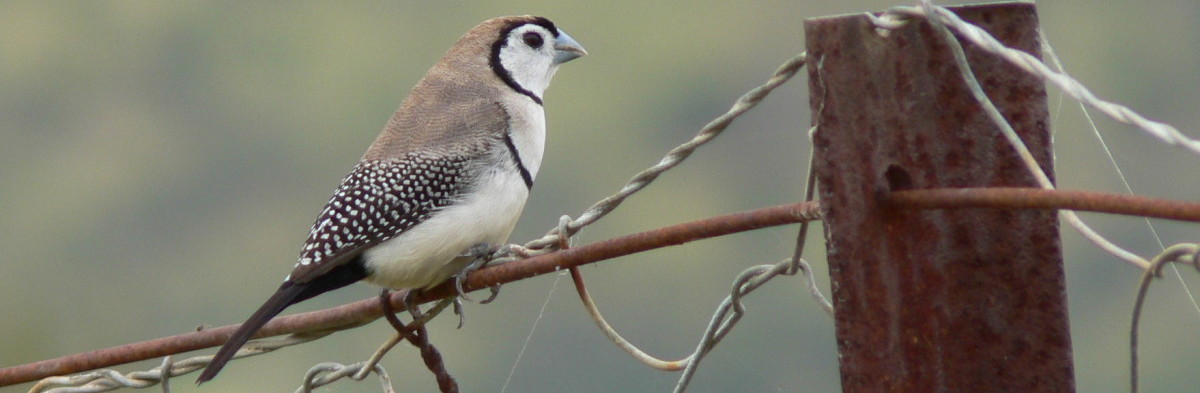
| Survey Point | Mt Dundas 2 Vic |
| Latitude | -37.4350000 (37° 26′ 6″ S) |
| Longitude | 141.9069400 (141° 54′ 25″ E) |
On the Natimuk-Hamilton Rd about 12km NW of Cavendish, Masons Rd heads west. About 4km along it an unmarked track heads south over a sand dune along a fence to the site about 500m along. There is excellent woodland to the west and regenerating woodland to the east.
camp rating 7, by the track. There is no established camp here.
Surveys done 3
Blogs, see main page archives:
Western Victoria 2020
NW Victoria, Ngarkat SA, central NSW, Bowra Qld 2025
- Common Bronzewing
- Phaps chalcoptera
- 1 (33.33%)
- Great Pied Cormorant
- Phalacrocorax varius
- 1 (33.33%)
- Laughing Kookaburra
- Dacelo novaeguineae
- 1 (33.33%)
- Crimson Rosella
- Platycercus elegans
- 2 (66.67%)
- White-throated Treecreeper
- Cormobates leucophaea
- 3 (100.00%)
- Superb Fairy-wren
- Malurus cyaneus
- 2 (66.67%)
- New Holland Honeyeater
- Phylidonyris novaehollandiae
- 2 (66.67%)
- White-eared Honeyeater
- Nesoptilotis leucotis
- 3 (100.00%)
- Brown-headed Honeyeater
- Melithreptus brevirostris
- 1 (33.33%)
- White-naped Honeyeater
- Melithreptus lunatus
- 1 (33.33%)
- Red Wattlebird
- Anthochaera carunculata
- 2 (66.67%)
- White-plumed Honeyeater
- Ptilotula penicillata
- 1 (33.33%)
- Yellow-faced Honeyeater
- Caligavis chrysops
- 1 (33.33%)
- Spotted Pardalote
- Pardalotus punctatus
- 2 (66.67%)
- White-browed Scrubwren
- Sericornis frontalis
- 1 (33.33%)
- Yellow-rumped Thornbill
- Acanthiza chrysorrhoa
- 1 (33.33%)
- Yellow Thornbill
- Acanthiza nana
- 1 (33.33%)
- Brown Thornbill
- Acanthiza pusilla
- 1 (33.33%)
- Golden Whistler
- Pachycephala pectoralis
- 1 (33.33%)
- Grey Shrike-thrush
- Colluricincla harmonica
- 1 (33.33%)
- Grey Currawong
- Strepera versicolor
- 1 (33.33%)
- Australian Magpie
- Gymnorhina tibicen
- 3 (100.00%)
- Willie Wagtail
- Rhipidura leucophrys
- 1 (33.33%)
- Grey Fantail
- Rhipidura albiscapa
- 2 (66.67%)
- Forest Raven
- Corvus tasmanicus
- 2 (66.67%)
- Scarlet Robin
- Petroica boodang
- 1 (33.33%)
- Welcome Swallow
- Hirundo neoxena
- 1 (33.33%)
- Silvereye
- Zosterops lateralis
- 1 (33.33%)
