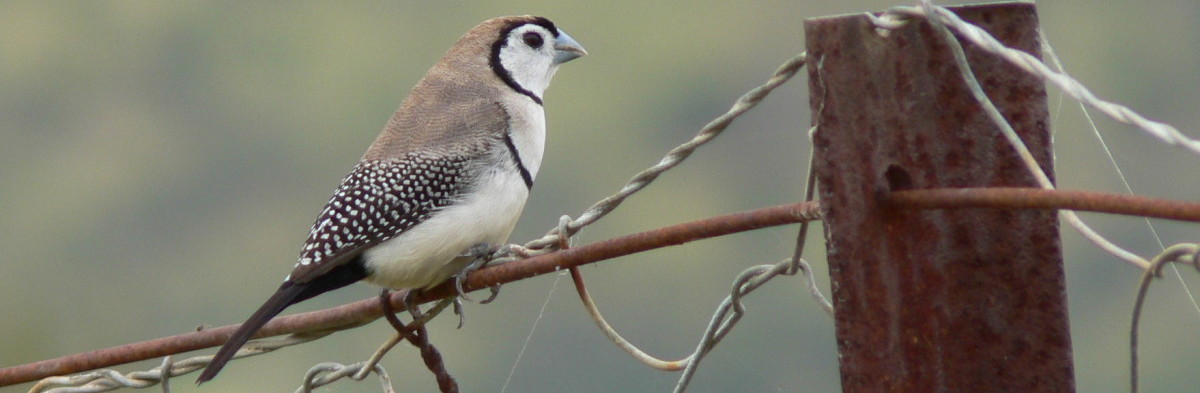
| Survey Point | Settling Ponds or Newey Reserve Cobar NSW |
| Latitude | -31.5108300 (31° 30′ 39″ S) |
| Longitude | 145.8319400 (145° 49′ 55″ E) |
On the south side of town off the Lerida Rd Belagoy St runs east down to the free campsite. The toilet block is aged, and it’s a popular site to camp, but the small twin lakes if they have water in them make it worthwhile. There is some remnant woodland in patches at this humanized site.
Camp rating 8. Apparently the free camping here has been either temporarily or permanently banned by council recently.
Surveys done 4
Blogs, see main page archives:
Central NSW to Lake Bindegolly 2015
Melbourne to Adels Grove Qld 2016
NW Victoria, Ngarkat SA, central NSW, Bowra Qld 2025
- Black Swan
- Cygnus atratus
- 3 (75.00%)
- Hardhead
- Aythya australis
- 2 (50.00%)
- Pacific Black Duck
- Anas superciliosa
- 4 (100.00%)
- Mallard
- Anas platyrhynchos
- 1 (25.00%)
- Grey Teal
- Anas gracilis
- 1 (25.00%)
- Australasian Grebe
- Tachybaptus novaehollandiae
- 1 (25.00%)
- Great Crested Grebe
- Podiceps cristatus
- 2 (50.00%)
- Common Bronzewing
- Phaps chalcoptera
- 1 (25.00%)
- Crested Pigeon
- Ocyphaps lophotes
- 1 (25.00%)
- Peaceful Dove
- Geopelia placida
- 2 (50.00%)
- Bar-shouldered Dove
- Geopelia humeralis
- 2 (50.00%)
- Australian Spotted Crake
- Porzana fluminea
- 1 (25.00%)
- Dusky Moorhen
- Gallinula tenebrosa
- 1 (25.00%)
- Eurasian Coot
- Fulica atra
- 4 (100.00%)
- Pied Stilt
- Himantopus leucocephalus
- 1 (25.00%)
- Black-fronted Dotterel
- Elseyornis melanops
- 1 (25.00%)
- Masked Lapwing
- Vanellus miles
- 3 (75.00%)
- Australian Pelican
- Pelecanus conspicillatus
- 2 (50.00%)
- Great Egret
- Ardea alba
- 2 (50.00%)
- White-faced Heron
- Egretta novaehollandiae
- 2 (50.00%)
- Little Pied Cormorant
- Microcarbo melanoleucos
- 2 (50.00%)
- Great Cormorant
- Phalacrocorax carbo
- 1 (25.00%)
- Little Black Cormorant
- Phalacrocorax sulcirostris
- 2 (50.00%)
- Great Pied Cormorant
- Phalacrocorax varius
- 2 (50.00%)
- Australasian Darter
- Anhinga novaehollandiae
- 2 (50.00%)
- Brown Goshawk
- Accipiter fasciatus
- 1 (25.00%)
- Whistling Kite
- Haliastur sphenurus
- 4 (100.00%)
- Galah
- Eolophus roseicapilla
- 2 (50.00%)
- Red-winged Parrot
- Aprosmictus erythropterus
- 3 (75.00%)
- Australian Ringneck
- Barnardius zonarius
- 1 (25.00%)
- Spotted Bowerbird
- Chlamydera maculata
- 1 (25.00%)
- Striped Honeyeater
- Plectorhyncha lanceolata
- 2 (50.00%)
- Little Friarbird
- Philemon citreogularis
- 1 (25.00%)
- Blue-faced Honeyeater
- Entomyzon cyanotis
- 1 (25.00%)
- Brown-headed Honeyeater
- Melithreptus brevirostris
- 1 (25.00%)
- Spiny-cheeked Honeyeater
- Acanthagenys rufogularis
- 4 (100.00%)
- White-plumed Honeyeater
- Ptilotula penicillata
- 3 (75.00%)
- Inland Thornbill
- Acanthiza apicalis
- 1 (25.00%)
- Grey Shrike-thrush
- Colluricincla harmonica
- 2 (50.00%)
- Grey Butcherbird
- Cracticus torquatus
- 1 (25.00%)
- Masked Woodswallow
- Artamus personatus
- 1 (25.00%)
- White-breasted Woodswallow
- Artamus leucorynchus
- 2 (50.00%)
- Willie Wagtail
- Rhipidura leucophrys
- 4 (100.00%)
- Grey Fantail
- Rhipidura albiscapa
- 2 (50.00%)
- Australian Raven
- Corvus coronoides
- 2 (50.00%)
- Restless Flycatcher
- Myiagra inquieta
- 2 (50.00%)
- Magpie-lark
- Grallina cyanoleuca
- 4 (100.00%)
- Eastern Yellow Robin
- Eopsaltria australis
- 1 (25.00%)
- Mistletoebird
- Dicaeum hirundinaceum
- 3 (75.00%)
- Little Grassbird
- Poodytes gramineus
- 1 (25.00%)
- Australian Reed-Warbler
- Acrocephalus australis
- 1 (25.00%)
- Fairy Martin
- Petrochelidon ariel
- 1 (25.00%)
- Tree Martin
- Petrochelidon nigricans
- 2 (50.00%)
- Welcome Swallow
- Hirundo neoxena
- 2 (50.00%)
- Silvereye
- Zosterops lateralis
- 1 (25.00%)
- Common Blackbird
- Turdus merula
- 2 (50.00%)
